English Learning in the AI Era: Moving from Word Rote Memory to Neural Context Networks
Go beyond static vocabulary lists: Discover how AI-powered spaced repetition (SRS) and context extraction redefine language acquisition.
Listen to Article (High-Definition Audio)
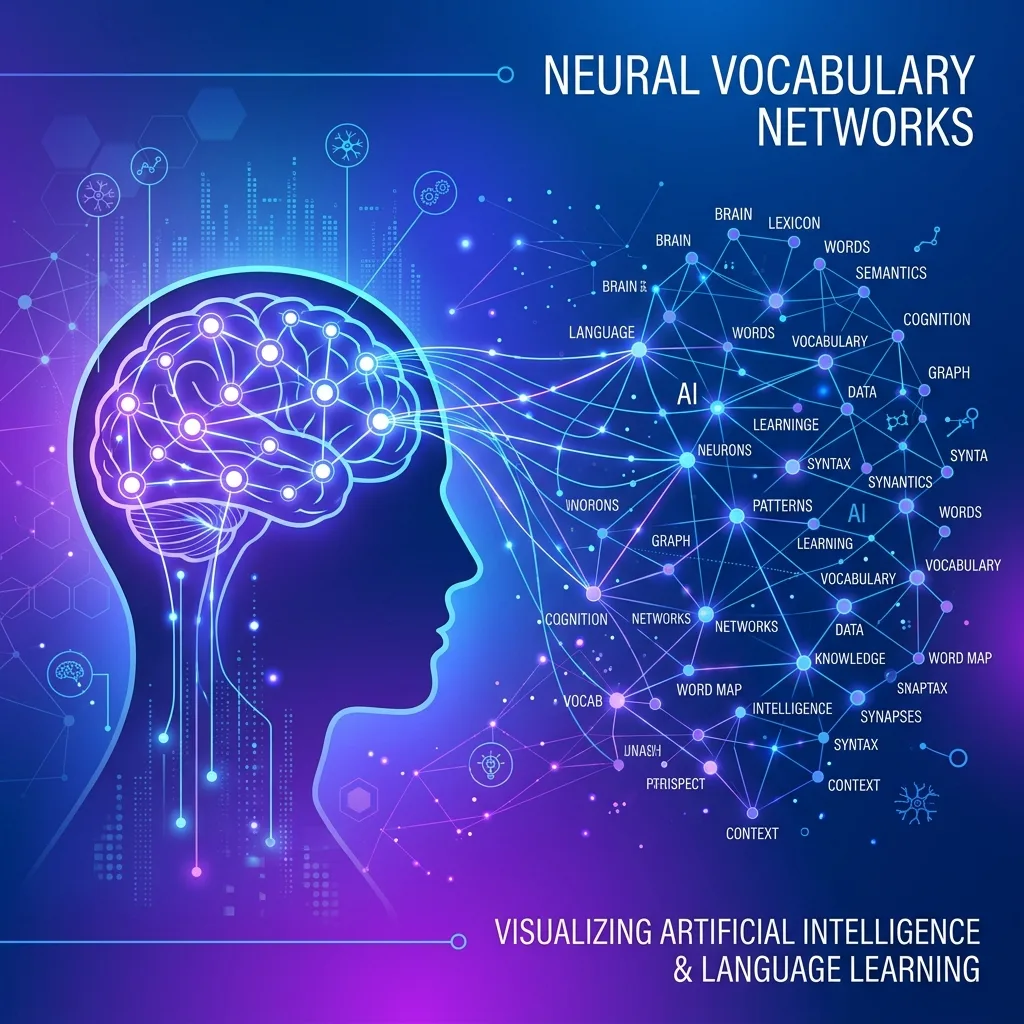
Why Do Isolated Word Lists Fade from Memory?
Learning isolated words without sentence context fails because the brain requires associative neural triggers to consolidate items into long-term memory.
Download Vocabulary Guide For This Article
Download our custom-made printable PDF study sheet featuring all the essential vocabulary related to this topic.

Hakan Dağ
Founder & Language Architect
Software Engineer and English Instructor with 15+ years of experience in IT and education technology. Passionate about merging smart tools with genuine pedagogy.
Related Posts
Language Fossilization: Why You Have Been Making the Same Mistake for Years (and Nobody Told You)
'I am agree', 'discuss about', 'informations'... You have spoken English for years, you get understood, you may even run good meetings, yet a handful of errors seem carved in stone. Larry Selinker named it 'fossilization' in 1972: an interlanguage that stops growing exactly where communication stops demanding more. We look at why it happens, which errors tend to harden in Turkish speakers, and how 'noticing' can finally crack the shell.
Stephen Krashen's Affective Filter Hypothesis and the Neurobiology of Linguistic Freeze: How the Amygdala Shuts Down Adult Speech Production
Why do highly credentialed professionals who comprehend 95% of written English and possess rich vocabularies suddenly freeze the moment an impromptu question is directed at them in an international meeting? Drawing upon Stephen Krashen's foundational Second Language Acquisition (SLA) Monitor Model and contemporary cognitive neuroscience, we investigate the amygdala hijack behind linguistic paralysis, dismantle adult perfectionism, and present an actionable '80% Adequacy Protocol' to lower the affective filter permanently.
The Math of Understanding: The 98% Rule, Word Frequency, and Why the Right 3,000 Words Beat 10,000 Random Ones
Knowing 90% of the words in a text sounds great. In reality, it means one unknown word in every line, and it turns reading into a struggle. Using numbers and visuals, we explain the hidden threshold linguists call "coverage," what Zipf's law means for vocabulary learning, and how to choose your word list wisely.
💬 Discussion0
You must log in to comment.
Put Learning into Practice!
Improve your vocabulary with WordMaster, practice with an AI tutor.
Start for Free