Atlas of Errors for Turkish Speakers
We've all been there. Struggling with that 'TH' sound or mixing up genders with the neutral 'O'. This isn't just a list of mistakes—it's a guide to the linguistic traps we fall into when merging English with our Turkish worldview.
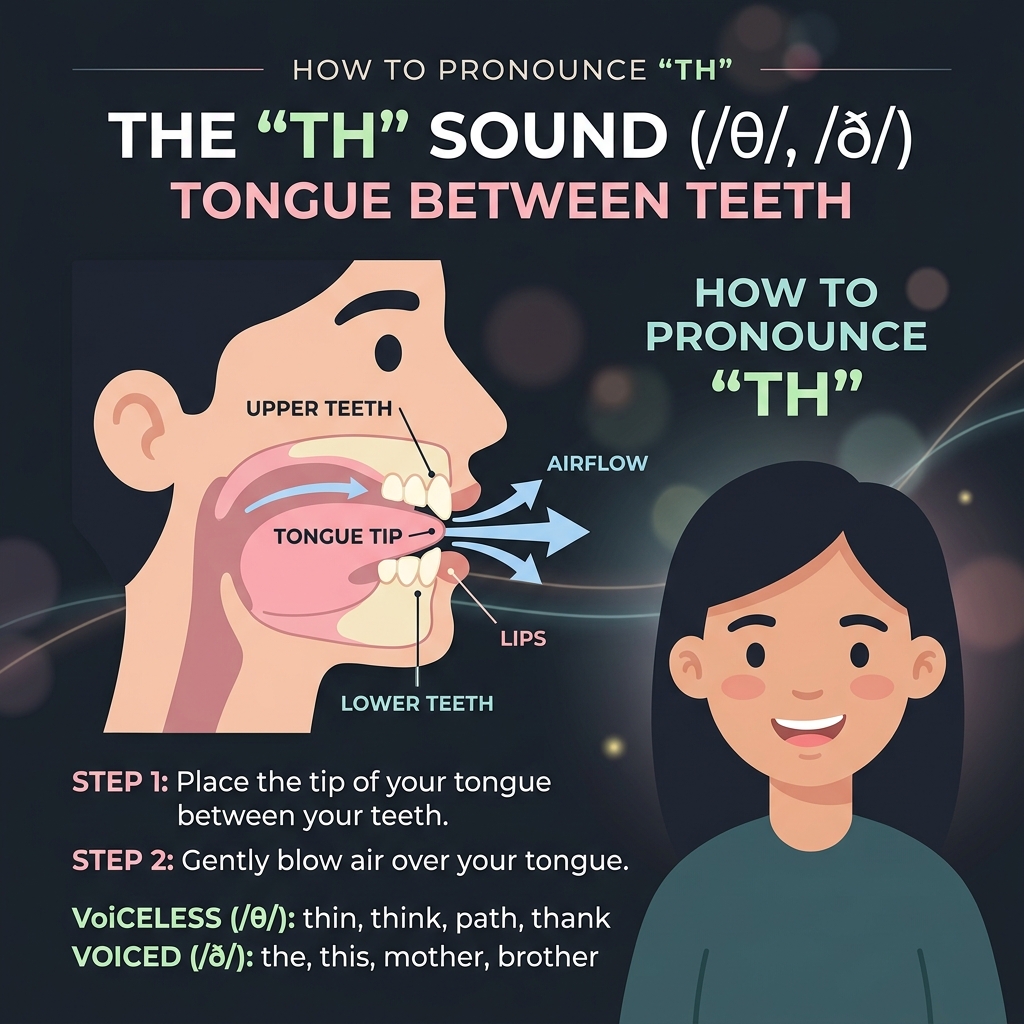
Sound Labyrinth
Find out why you say "tenk you".

Gender Bridge
The journey from 'O' to He/She/It.

Preposition Triangle
Where to use In, On, At?
The 'TH' sound doesn't exist in Turkish, so learners often fall back on 'T' or 'S'. The secret is a light touch of the tongue between the teeth.
Turkish phonology avoids double consonants at the start of words, so speakers often add an 'i'. In English, that extra vowel isn't needed.
Mixing up V and W is common. V requires lip-to-teeth contact, whereas W is purely a rounded-lip sound.
Silent 'b' at the end of words is a classic trap. Turkish speakers, used to phonetic consistency, often pronounce every letter.
Turkish is phonetic, so learners try to pronounce every syllable. In English, stress reduces the middle syllables significantly.
The leading 'P' is silent in English. Starting with 'SAY' is the key to natural pronunciation.
One of the most common traps. The 's' is completely silent.
Learners over-apply the 'to' preposition to represent the dative suffix '-e'.
Ignoring the 3rd person singular '-s' is a universal struggle for Turkish speakers.
Duration uses 'for', while specific starting points use 'since'.
Mapping the neutral 'O' to gendered pronouns is a fundamental challenge.
Turkish uses a 'noun clause' structure for desire, while English uses the infinitive 'to do'.
'Agree' is a verb, not an adjective. It requires the 'do' auxiliary.
Even though 'people' doesn't have an 's', it is a collective plural noun.
'Listen' is an intransitive verb requiring 'to' before an object.
Learners over-rely on 'to' for any directional context.
'Actual' is a false friend; it means factual, not contemporary.
'Sympathetic' means compassionate, not necessarily charismatic.
Consistently used as a synonym for 'present', not 'dowry'.
'Control' implies power, while 'check' implies verification.
'Chance' is often luck-based, while 'opportunity' is situation-based.
'Comfortable' relates to physical comfort; 'convenient' relates to ease or timing.
'Special' means extraordinary; 'private' means personal/restricted.
Losing something is voluntary/accidental; theft is an external action.
English uses 'have' for consumption, Turkish uses 'make' or 'do'.
Students take lessons; teachers give them.
A literal translation sounds like your head is physically rotating like a fan.
Turkish has a specific phrase for post-meal wishes; English is more casual.
Literally asking if someone has the organ 'heart' vs. asking for bravery.
Direct SVO order is vital for natural flow.
Physical opening (like a window) vs. electrical activation.
Silent letter trap: In English, many letters are graphemes but not phonemes. Turkish learners tend to pronounce everything because their language is phonetic.
Silent letter trap: In English, many letters are graphemes but not phonemes. Turkish learners tend to pronounce everything because their language is phonetic.
Silent letter trap: In English, many letters are graphemes but not phonemes. Turkish learners tend to pronounce everything because their language is phonetic.
Silent letter trap: In English, many letters are graphemes but not phonemes. Turkish learners tend to pronounce everything because their language is phonetic.
Silent letter trap: In English, many letters are graphemes but not phonemes. Turkish learners tend to pronounce everything because their language is phonetic.
Silent letter trap: In English, many letters are graphemes but not phonemes. Turkish learners tend to pronounce everything because their language is phonetic.
Silent letter trap: In English, many letters are graphemes but not phonemes. Turkish learners tend to pronounce everything because their language is phonetic.
Silent letter trap: In English, many letters are graphemes but not phonemes. Turkish learners tend to pronounce everything because their language is phonetic.
Silent letter trap: In English, many letters are graphemes but not phonemes. Turkish learners tend to pronounce everything because their language is phonetic.
Silent letter trap: In English, many letters are graphemes but not phonemes. Turkish learners tend to pronounce everything because their language is phonetic.
Silent letter trap: In English, many letters are graphemes but not phonemes. Turkish learners tend to pronounce everything because their language is phonetic.
Silent letter trap: In English, many letters are graphemes but not phonemes. Turkish learners tend to pronounce everything because their language is phonetic.
Silent letter trap: In English, many letters are graphemes but not phonemes. Turkish learners tend to pronounce everything because their language is phonetic.
Silent letter trap: In English, many letters are graphemes but not phonemes. Turkish learners tend to pronounce everything because their language is phonetic.
Silent letter trap: In English, many letters are graphemes but not phonemes. Turkish learners tend to pronounce everything because their language is phonetic.
Silent letter trap: In English, many letters are graphemes but not phonemes. Turkish learners tend to pronounce everything because their language is phonetic.
Silent letter trap: In English, many letters are graphemes but not phonemes. Turkish learners tend to pronounce everything because their language is phonetic.
Silent letter trap: In English, many letters are graphemes but not phonemes. Turkish learners tend to pronounce everything because their language is phonetic.
Silent letter trap: In English, many letters are graphemes but not phonemes. Turkish learners tend to pronounce everything because their language is phonetic.
Silent letter trap: In English, many letters are graphemes but not phonemes. Turkish learners tend to pronounce everything because their language is phonetic.
Silent letter trap: In English, many letters are graphemes but not phonemes. Turkish learners tend to pronounce everything because their language is phonetic.
Silent letter trap: In English, many letters are graphemes but not phonemes. Turkish learners tend to pronounce everything because their language is phonetic.
Silent letter trap: In English, many letters are graphemes but not phonemes. Turkish learners tend to pronounce everything because their language is phonetic.
Silent letter trap: In English, many letters are graphemes but not phonemes. Turkish learners tend to pronounce everything because their language is phonetic.
Silent letter trap: In English, many letters are graphemes but not phonemes. Turkish learners tend to pronounce everything because their language is phonetic.
Verb-preposition collocations are fixed. Direct transition from Turkish case suffixes often leads to incorrect preposition choices.
Verb-preposition collocations are fixed. Direct transition from Turkish case suffixes often leads to incorrect preposition choices.
Verb-preposition collocations are fixed. Direct transition from Turkish case suffixes often leads to incorrect preposition choices.
Verb-preposition collocations are fixed. Direct transition from Turkish case suffixes often leads to incorrect preposition choices.
Verb-preposition collocations are fixed. Direct transition from Turkish case suffixes often leads to incorrect preposition choices.
Verb-preposition collocations are fixed. Direct transition from Turkish case suffixes often leads to incorrect preposition choices.
Verb-preposition collocations are fixed. Direct transition from Turkish case suffixes often leads to incorrect preposition choices.
Verb-preposition collocations are fixed. Direct transition from Turkish case suffixes often leads to incorrect preposition choices.
Verb-preposition collocations are fixed. Direct transition from Turkish case suffixes often leads to incorrect preposition choices.
Verb-preposition collocations are fixed. Direct transition from Turkish case suffixes often leads to incorrect preposition choices.
Verb-preposition collocations are fixed. Direct transition from Turkish case suffixes often leads to incorrect preposition choices.
Verb-preposition collocations are fixed. Direct transition from Turkish case suffixes often leads to incorrect preposition choices.
Verb-preposition collocations are fixed. Direct transition from Turkish case suffixes often leads to incorrect preposition choices.
Verb-preposition collocations are fixed. Direct transition from Turkish case suffixes often leads to incorrect preposition choices.
Verb-preposition collocations are fixed. Direct transition from Turkish case suffixes often leads to incorrect preposition choices.
Verb-preposition collocations are fixed. Direct transition from Turkish case suffixes often leads to incorrect preposition choices.
Verb-preposition collocations are fixed. Direct transition from Turkish case suffixes often leads to incorrect preposition choices.
Verb-preposition collocations are fixed. Direct transition from Turkish case suffixes often leads to incorrect preposition choices.
Verb-preposition collocations are fixed. Direct transition from Turkish case suffixes often leads to incorrect preposition choices.
Verb-preposition collocations are fixed. Direct transition from Turkish case suffixes often leads to incorrect preposition choices.
Verb-preposition collocations are fixed. Direct transition from Turkish case suffixes often leads to incorrect preposition choices.
Verb-preposition collocations are fixed. Direct transition from Turkish case suffixes often leads to incorrect preposition choices.
Verb-preposition collocations are fixed. Direct transition from Turkish case suffixes often leads to incorrect preposition choices.
Verb-preposition collocations are fixed. Direct transition from Turkish case suffixes often leads to incorrect preposition choices.
Verb-preposition collocations are fixed. Direct transition from Turkish case suffixes often leads to incorrect preposition choices.
False friends are words that look or sound similar but have different meanings in English and Turkish.
False friends are words that look or sound similar but have different meanings in English and Turkish.
False friends are words that look or sound similar but have different meanings in English and Turkish.
False friends are words that look or sound similar but have different meanings in English and Turkish.
False friends are words that look or sound similar but have different meanings in English and Turkish.
False friends are words that look or sound similar but have different meanings in English and Turkish.
False friends are words that look or sound similar but have different meanings in English and Turkish.
False friends are words that look or sound similar but have different meanings in English and Turkish.
False friends are words that look or sound similar but have different meanings in English and Turkish.
False friends are words that look or sound similar but have different meanings in English and Turkish.
False friends are words that look or sound similar but have different meanings in English and Turkish.
False friends are words that look or sound similar but have different meanings in English and Turkish.
False friends are words that look or sound similar but have different meanings in English and Turkish.
False friends are words that look or sound similar but have different meanings in English and Turkish.
False friends are words that look or sound similar but have different meanings in English and Turkish.
False friends are words that look or sound similar but have different meanings in English and Turkish.
False friends are words that look or sound similar but have different meanings in English and Turkish.
False friends are words that look or sound similar but have different meanings in English and Turkish.
False friends are words that look or sound similar but have different meanings in English and Turkish.
False friends are words that look or sound similar but have different meanings in English and Turkish.
False friends are words that look or sound similar but have different meanings in English and Turkish.
False friends are words that look or sound similar but have different meanings in English and Turkish.
False friends are words that look or sound similar but have different meanings in English and Turkish.
False friends are words that look or sound similar but have different meanings in English and Turkish.
False friends are words that look or sound similar but have different meanings in English and Turkish.
False friends are words that look or sound similar but have different meanings in English and Turkish.
False friends are words that look or sound similar but have different meanings in English and Turkish.
False friends are words that look or sound similar but have different meanings in English and Turkish.
False friends are words that look or sound similar but have different meanings in English and Turkish.
False friends are words that look or sound similar but have different meanings in English and Turkish.
False friends are words that look or sound similar but have different meanings in English and Turkish.
False friends are words that look or sound similar but have different meanings in English and Turkish.
False friends are words that look or sound similar but have different meanings in English and Turkish.
False friends are words that look or sound similar but have different meanings in English and Turkish.
False friends are words that look or sound similar but have different meanings in English and Turkish.
False friends are words that look or sound similar but have different meanings in English and Turkish.
False friends are words that look or sound similar but have different meanings in English and Turkish.
False friends are words that look or sound similar but have different meanings in English and Turkish.
False friends are words that look or sound similar but have different meanings in English and Turkish.
False friends are words that look or sound similar but have different meanings in English and Turkish.
Expressional errors: Translating Turkish idioms literally into English often results in non-native and confusing phrasing.
Expressional errors: Translating Turkish idioms literally into English often results in non-native and confusing phrasing.
Expressional errors: Translating Turkish idioms literally into English often results in non-native and confusing phrasing.
Expressional errors: Translating Turkish idioms literally into English often results in non-native and confusing phrasing.
Expressional errors: Translating Turkish idioms literally into English often results in non-native and confusing phrasing.
Expressional errors: Translating Turkish idioms literally into English often results in non-native and confusing phrasing.
Expressional errors: Translating Turkish idioms literally into English often results in non-native and confusing phrasing.
Expressional errors: Translating Turkish idioms literally into English often results in non-native and confusing phrasing.
Expressional errors: Translating Turkish idioms literally into English often results in non-native and confusing phrasing.
Expressional errors: Translating Turkish idioms literally into English often results in non-native and confusing phrasing.
Expressional errors: Translating Turkish idioms literally into English often results in non-native and confusing phrasing.
Expressional errors: Translating Turkish idioms literally into English often results in non-native and confusing phrasing.
Expressional errors: Translating Turkish idioms literally into English often results in non-native and confusing phrasing.
Expressional errors: Translating Turkish idioms literally into English often results in non-native and confusing phrasing.
Expressional errors: Translating Turkish idioms literally into English often results in non-native and confusing phrasing.
Expressional errors: Translating Turkish idioms literally into English often results in non-native and confusing phrasing.
Expressional errors: Translating Turkish idioms literally into English often results in non-native and confusing phrasing.
Expressional errors: Translating Turkish idioms literally into English often results in non-native and confusing phrasing.
Expressional errors: Translating Turkish idioms literally into English often results in non-native and confusing phrasing.
Expressional errors: Translating Turkish idioms literally into English often results in non-native and confusing phrasing.
Expressional errors: Translating Turkish idioms literally into English often results in non-native and confusing phrasing.
Expressional errors: Translating Turkish idioms literally into English often results in non-native and confusing phrasing.
Expressional errors: Translating Turkish idioms literally into English often results in non-native and confusing phrasing.
Expressional errors: Translating Turkish idioms literally into English often results in non-native and confusing phrasing.
Expressional errors: Translating Turkish idioms literally into English often results in non-native and confusing phrasing.
Expressional errors: Translating Turkish idioms literally into English often results in non-native and confusing phrasing.
Expressional errors: Translating Turkish idioms literally into English often results in non-native and confusing phrasing.
Expressional errors: Translating Turkish idioms literally into English often results in non-native and confusing phrasing.
Expressional errors: Translating Turkish idioms literally into English often results in non-native and confusing phrasing.
Expressional errors: Translating Turkish idioms literally into English often results in non-native and confusing phrasing.
Age is a state of being in English, unlike in Turkish or French where it is something you 'have'.
Turkish uses existential 'var/yok' for possession. English requires 'to have'.
Bu Atlas Canlı Bir Organizma!
Türkçe konuşurken İngilizce ile yaşadığımız etkileşimi her gün gözlemliyor ve bu atlası genişletiyoruz. Sizin de sık düştüğünüz tuzaklar varsa bize yazın!
Hata Bildir / Öneride BulunQuick check
5 questions · your score counts as XP
Which one is correct? — "I listen music"